
Scotland v Yugoslavia, 1974
Chris Oakley | 19 February 2026

By the time Scotland met Yugoslavia in Frankfurt on 22 June 1974, they were unbeaten, proud, determined — but somehow on the brink. Yugoslavia, meanwhile, arrived carrying the quiet menace of a side who'd recently put nine past Zaire and were living up to their tag as 'dark horses' for World Cup '74.
In their First Round group, both Scotland and Yugoslavia had already held Brazil to a goalless draw in Group 2, so their meeting at the Waldstadion was effectively a final. Brazil were expected to comfortably beat Zaire in their remaining game, so Scotland had to beat the Yugoslavs. Nothing less would do.
An evenly balanced match ensued, with both teams having several chances to score. The game remained goalless until Stanislav Karasi's flying header gave Yugoslavia the lead with nine minutes remaining. Yet just as all Scottish hopes were waning, Joe Jordan thumped the ball home to equalise after 88 minutes, but it was too little, too late. The match finished 1–1, and Scotland were out on goal difference, victims of arithmetic more than technical incompetence.
But Kits at the Crossroads is about more than the scoreline. It's about what the teams looked like when history caught up with them.

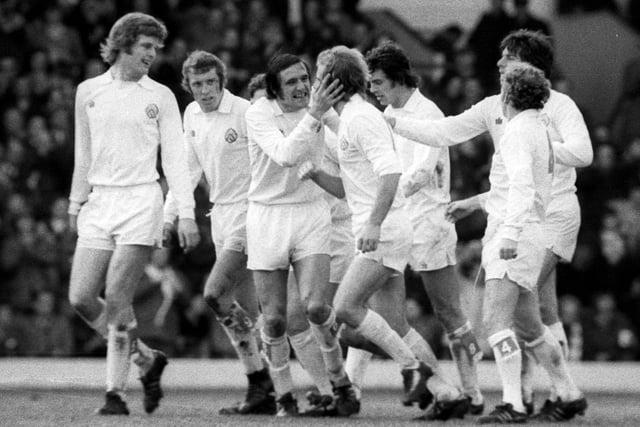
Scotland took the field in a kit that was timeless... in the same way that Stonehenge looks timeless. Their plain white away shirt by Umbro had a refined dignity and purity all of its own. With its winged collar and triangular inset — a not uncommon look at the time — Scotland looked the very embodiment of 'Football in 1974.' By comparison, however, their opponents looked like they were playing in 1984.
Yugoslavia had the undeniable privilege of wearing Adidas kit, three years before any club in England or Scotland had done so. Their blue shirt had a stylish v-neckline with a cut and fit that oozed European flair, the sleeves decorated in a tremendous tricolore version of the Adidas three-stripe trim. The only thing that was missing was the Adidas logo on the right breast, but perhaps nothing in this world is perfect.
As much as anything, the Scotland kit just looked inferior from the moment it left the designer's desk. The basic shirt looked starchy and slightly boxy in shape. Where Yugoslavia's had the fine lines of an Aston Martin, Scotland's looked more 'British Leyland' by comparison, as if it could have been made at any point in the previous two decades.
The Eastern Europeans wore blue shorts on the day (matching the colour of their shirts), while their red socks completed a darker silhouette that would have been a blessing for anyone watching on a black-and-white TV. Inescapably, however, it was the triple-stripe embellishment provided by Adidas that made the kit look engineered, sharp and modern. Even the numbers on the backs of the shirts seemed to be composed of three stripes, a subtle but delightful strengthening of the brand.

Number styles from the 1974 World Cup match in Group 2: Scotland (left) and Yugoslavia (right).
All Umbro could offer in return were some sock tags of the kind Leeds United had pioneered a couple of years earlier. Actually, it wouldn't be unfair to say that Scotland's away kit was, essentially, a Leeds United home kit from the domestic season just past. The styling was the same, the colour was the same, and it was even being worn by four Leeds players. None of that makes it a bad kit because in 1974, no-one expected any different. Unfortunately for Umbro, Adidas were already operating on a completely different creative level.
From here onwards, the visual language of football kit design would slowly change into a form we can relate to today, and we owe a lot of that to Adidas. On that afternoon in Frankfurt, however, British fans had no idea how great an impact the German kit supplier was about to have on their favourite sport in the years to come.